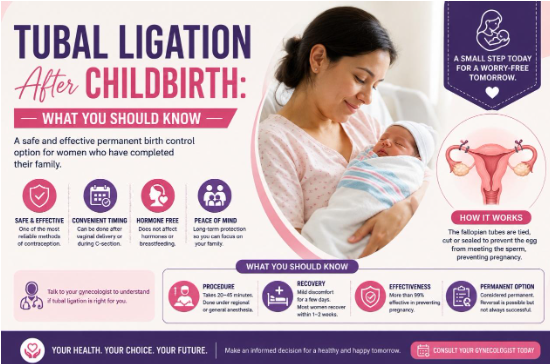
For many women and couples who feel their family is complete, tubal ligation after childbirth can be a practical long-term birth control option. Often referred to as “getting tubes tied,” tubal ligation is a permanent female sterilization procedure that prevents future pregnancies by blocking or sealing the fallopian tubes.
Many women choose to undergo the procedure shortly after delivery because it can be conveniently combined with childbirth-related hospitalization. However, before making a decision, it is important to understand how the procedure works, its benefits, recovery process, possible risks, and long-term considerations.
This guide explains everything women should know about tubal ligation after childbirth.
What Is Tubal Ligation?
Tubal ligation is a surgical sterilization procedure in which the fallopian tubes are blocked, tied, clipped, or sealed to prevent eggs from reaching the uterus for fertilization.
Once the tubes are closed, sperm cannot meet the egg, which prevents pregnancy.
Tubal ligation is considered a permanent contraceptive method and is intended for women who do not wish to become pregnant in the future.
Why Tubal Ligation Is Common After Childbirth
Many women choose tubal ligation immediately after childbirth because:
- The uterus is still enlarged, making the fallopian tubes easier to access
- The mother is already hospitalized
- Recovery can happen alongside postpartum healing
- It avoids the need for a separate future surgery
The procedure may be performed:
- After a vaginal delivery
- During a cesarean section (C-section)
This timing is known as postpartum tubal ligation.
Tubal Ligation After Vaginal Delivery
After a normal vaginal birth, tubal ligation is usually performed within 24–48 hours.
A small incision is made near the belly button, allowing the surgeon to access the fallopian tubes.
The tubes may then be:
- Tied and cut
- Sealed using cauterization
- Closed using clips or tubal rings
The procedure is generally completed under regional or general anesthesia.
Tubal Ligation During Cesarean Section
For women undergoing a C-section, tubal ligation can often be done during the same surgery without requiring an additional incision.
After the baby is delivered, the surgeon accesses the fallopian tubes directly through the cesarean incision and performs the sterilization procedure.
This approach is often considered convenient because:
- No second surgery is required
- Recovery does not significantly change
- Additional hospitalization is avoided
How Effective Is Tubal Ligation?
Tubal ligation is one of the most effective forms of birth control.
Its effectiveness is generally more than 99%.
However, no sterilization method is considered absolutely 100% guaranteed. In rare cases, the tubes may reconnect naturally over time.
Benefits of Tubal Ligation After Childbirth
Permanent Pregnancy Prevention
The biggest advantage is long-term contraception without the need for:
- Birth control pills
- IUCDs
- Hormonal injections
- Barrier methods
Convenience
Combining the procedure with childbirth reduces the need for another hospital visit or future surgery.
Hormone-Free Birth Control
Tubal ligation does not involve hormones, making it suitable for women who prefer non-hormonal contraception.
No Effect on Breastfeeding
The procedure generally does not interfere with breastfeeding or milk production.
Cost-Effective Long-Term Option
Although the procedure has an upfront surgical cost, it may reduce long-term contraception expenses over time.
Important Considerations Before Choosing Tubal Ligation
Because tubal ligation is considered permanent, women should think carefully before making the decision.
Important factors include:
- Family completion plans
- Age and future life circumstances
- Emotional readiness
- Medical history
- Relationship stability
Doctors usually recommend counseling before the procedure to ensure informed decision-making.
Can Tubal Ligation Be Reversed?
Tubal ligation reversal surgery is possible in some cases, but:
- It is complex
- It may not always succeed
- It can be expensive
- Pregnancy after reversal is not guaranteed
Because reversal success varies, tubal ligation should not be considered a temporary contraceptive option.
Recovery After Tubal Ligation
Recovery depends on whether the procedure was done after vaginal delivery or during a C-section.
Most women may experience:
- Mild abdominal discomfort
- Fatigue
- Incision soreness
- Temporary bloating
Recovery tips include:
- Adequate rest
- Avoiding heavy lifting
- Keeping the incision area clean
- Following medical instructions carefully
Most women recover fully within a few days to a couple of weeks, depending on the delivery type and surgical method.
Possible Risks and Complications
Tubal ligation is generally safe, but like any surgery, it may involve some risks.
Possible complications include:
- Infection
- Bleeding
- Reaction to anesthesia
- Pain near incision site
- Damage to nearby organs (rare)
There is also a small risk of ectopic pregnancy if pregnancy occurs after sterilization failure.
Does Tubal Ligation Affect Hormones or Menstrual Cycles?
Tubal ligation does not remove the ovaries or affect hormone production.
Most women continue to:
- Ovulate normally
- Have regular menstrual cycles
- Experience natural hormonal function
The procedure mainly blocks the egg’s pathway through the fallopian tubes.
Who Should Consider Tubal Ligation?
Tubal ligation may be suitable for women who:
- Have completed their family
- Want permanent contraception
- Prefer hormone-free birth control
- Want to avoid long-term contraceptive maintenance
However, it may not be ideal for women who are uncertain about future pregnancies.
Alternatives to Tubal Ligation
Women who are unsure about permanent sterilization may consider long-term reversible contraception options such as:
- Copper IUCDs
- Hormonal IUCDs
- Contraceptive implants
- Birth control injections
These options provide effective contraception without permanent sterilization.
Importance of Medical Counseling
Before deciding on tubal ligation, women should discuss:
- Health conditions
- Future pregnancy plans
- Surgical risks
- Alternative contraception options
with a qualified gynecologist.
Proper counseling helps ensure the decision is well-informed and suitable for long-term reproductive goals.
Final Thoughts
Tubal ligation after childbirth is a safe and highly effective permanent birth control option for women who have completed their families. Performing the procedure shortly after delivery can offer convenience, reduce future surgical needs, and provide long-term peace of mind.
However, because the procedure is intended to be permanent, it is important to carefully consider future family plans and discuss all available options with a healthcare professional before making a decision.