The Future of Dental Implants in Australia: How Advanced Technology Is Redefining Oral Health

The future of dentistry is no longer shaped solely by the dentist’s skill or the materials used to repair a damaged tooth. Increasingly, it is being influenced by digital intelligence, advanced imaging, precision engineering and a deeper understanding of how oral health connects with overall wellbeing. Across Australia, these developments are transforming how missing teeth are replaced, offering patients new possibilities for comfort, function and confidence. At the centre of this evolution are dental implants, which are becoming an increasingly sophisticated option for restoring smiles.
Yet the real revolution is not simply about creating teeth that look natural. It is about designing treatments that respect the complexity of the human mouth while making dental care more predictable, personalised and accessible.
From Traditional Procedures to Digitally Planned Smiles
Dental implant treatment has advanced considerably since the early days of modern implant dentistry. Traditionally, clinicians relied heavily on physical impressions, two-dimensional X-rays and their clinical experience to plan implant placement. These methods remain useful, but contemporary digital tools can provide a more detailed picture of a patient’s anatomy.
Three-dimensional cone beam computed tomography (CBCT) allows dentists to assess jawbone structure, identify important anatomical features and evaluate potential implant sites. When combined with digital scans and specialised planning software, this information can help clinicians determine the most appropriate position, angle and depth for an implant.
Computer-guided implant surgery takes this planning process further. A custom surgical guide can help transfer the digital plan to the patient’s mouth, supporting accurate placement in suitable cases. Although technology cannot eliminate surgical risks, careful planning can improve procedural predictability and help clinicians make better-informed decisions.
The result is a shift towards dentistry that begins with a detailed understanding of the individual rather than a standardised treatment approach.
Artificial Intelligence and the Personalisation of Oral Care
Artificial intelligence is also beginning to influence dental diagnosis, image analysis and treatment planning. AI-supported systems can assist clinicians in identifying patterns in dental images, organising clinical information and evaluating areas that may require closer examination.
In implant dentistry, these capabilities may contribute to more efficient assessments and improved communication between dental professionals. Digital simulations can help patients understand proposed treatment options before surgery, making conversations about expectations, limitations and potential outcomes more meaningful.
However, artificial intelligence should be viewed as a supporting tool rather than a substitute for professional judgement. Every patient has a different medical history, bone structure, bite and pattern of oral disease. A successful treatment plan must account for these differences, with the dentist remaining responsible for interpreting the available evidence.
The most promising future is therefore not a fully automated dental clinic, but a partnership between human expertise and intelligent technology.
Biomaterials and the Science of Healing
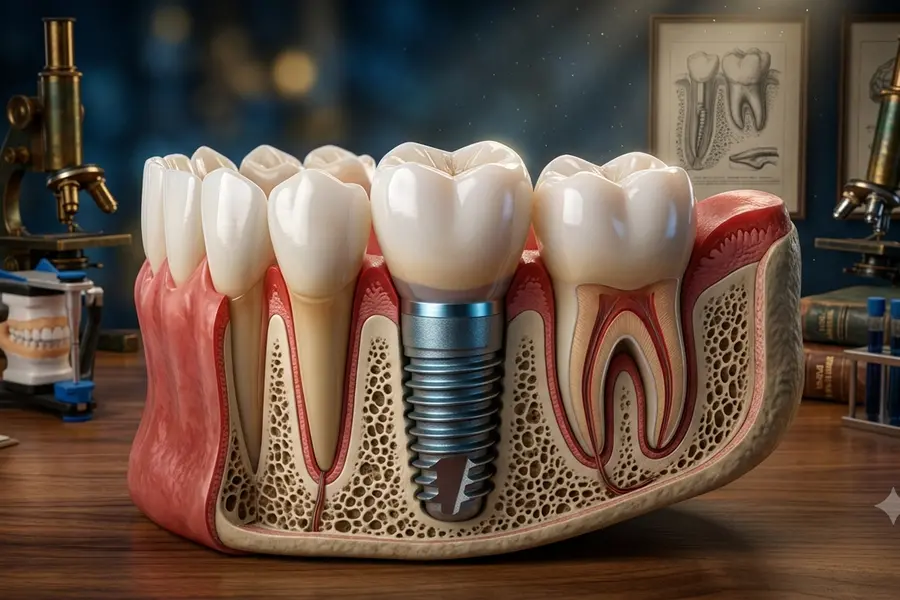
Technology is also advancing through the materials used to construct implants and their replacement teeth. Most conventional dental implants are manufactured from titanium, a material valued for its strength, biocompatibility and capacity to integrate with bone. Zirconia implants offer an alternative in selected circumstances, although their suitability depends on the patient’s needs and the available clinical evidence.
Researchers continue to investigate implant surface characteristics, coatings and designs that may influence bone integration and healing. These developments aim to improve the relationship between the implant and surrounding tissues rather than simply making the replacement tooth stronger or more attractive.
Digital manufacturing has also expanded the possibilities for producing customised crowns, bridges and full-arch restorations. When carefully designed, these restorations can support natural-looking contours, appropriate bite relationships and easier cleaning.
Ultimately, the best material is not necessarily the newest one. It is the option supported by sound evidence and suited to the patient’s anatomy, functional requirements and long-term maintenance needs.
Immediate Results Without Compromising Long-Term Health
One of the most exciting developments in implant dentistry is the possibility of providing a temporary or, in carefully selected cases, a definitive restoration on the day of implant surgery. This approach can reduce the period during which a patient must live with a visible gap or removable temporary appliance.
Nevertheless, immediate restoration is not appropriate for everyone. Implant stability, bone quality, the location of the missing tooth, bite forces and the patient’s overall health all influence whether an early restoration is advisable. Even when a temporary tooth is fitted promptly, the implant generally needs time to integrate with the surrounding bone.
For eligible patients, a carefully planned treatment can deliver immediate functional and aesthetic results, particularly when the clinical circumstances support immediate loading. The distinction is important: an attractive temporary tooth on the day of surgery does not necessarily mean the implant is ready to withstand unrestricted chewing.
By combining digital planning, precise surgical techniques and carefully designed restorations, clinicians can pursue faster treatment pathways without losing sight of the biological healing process.
The Australian Challenge: Access, Affordability and Prevention
Despite these advances, the future of implant dentistry in Australia will depend on more than technological innovation. Treatment costs can be substantial, and access to experienced clinicians and advanced diagnostic facilities varies between metropolitan, regional and remote communities.
Digital consultations, improved clinical workflows and appropriate referral networks may help reduce some practical barriers. However, technology alone cannot resolve affordability or geographic inequality. Patients still need transparent treatment estimates, clear explanations of alternatives and realistic information about the expected lifespan and maintenance requirements of their restorations.
Prevention remains equally important. Gum disease, smoking, poorly controlled diabetes and inadequate oral hygiene can affect implant outcomes. Patients should understand that implants do not develop tooth decay, but the tissues surrounding them can become inflamed or infected. Regular professional reviews, effective home care and early attention to warning signs are therefore essential.
A replacement tooth may be engineered with remarkable precision, but its long-term success still depends on the health of the person who receives it.
A More Thoughtful Future for Australian Dentistry
The next chapter of implant dentistry will likely bring increasingly integrated digital workflows, more sophisticated diagnostic assistance and further advances in restorative materials. These developments could help clinicians tailor treatments more closely to individual needs while improving communication and planning.
Yet the defining measure of progress should not be how quickly a clinic can place an implant or how impressive a digital simulation appears. It should be whether patients can eat comfortably, speak naturally, maintain healthy tissues and feel confident in their smiles over time.
For Australians considering tooth replacement, the most valuable innovation is a treatment plan that combines modern technology with experienced clinical judgement, honest communication and ongoing care.
The future of dental implants is therefore not simply about replacing what has been lost. It is about restoring function thoughtfully, protecting oral health and recognising that every successful smile represents a living relationship between science, biology and the individual.